


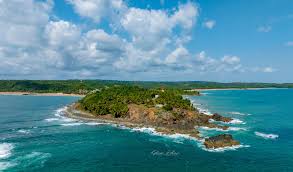
Programme Overview
This Marine Protected Areas (MPA) Short Course is designed as an introductory blended learning programme combining structured lectures with guided self-learning. The course aims to equip participants with a foundational understanding of Marine Protected Areas, the drivers behind their establishment, and their role in marine and coastal conservation at both national and international levels.
The programme progresses from broad conceptual discussions on marine environmental protection to more context-specific applications, with a strong focus on Ghana and the wider West African region. Participants will be introduced to the full MPA cycle, including identification, designation, management, monitoring, and integration within broader marine spatial planning frameworks. The course concludes with a reflective session that encourages learners to consider their role in marine conservation and stewardship.
Throughout the programme, practical case studies will be used to link theory to real-world examples, drawing primarily from West Africa while incorporating relevant international experiences.
Target Audience
The course is intended for:
- Students
- Academics
- Policymakers
- NGO’s and CSO’s working in marine and coastal management
Course Modules
Module 1: Introduction to Marine Protected Areas
This module introduces the marine environment and the rationale for its protection, highlighting the ecosystem services it provides and the pressures it faces. It also introduces MPAs as a key conservation tool, including their benefits and potential trade-offs.
Module 2: Marine Protected Areas in a Global Context
This module examines international drivers for MPAs and explores how MPAs are implemented across different regions, with a particular focus on African examples. It introduces different types of MPAs and associated management regimes.
Module 3: Marine Protected Areas in Ghana
This module focuses on Ghana’s marine and coastal ecosystems, the pressures they face, and current efforts toward marine protection. It provides an overview of national commitments, existing conservation measures, and progress toward the designation of Ghana’s first official MPA.
Module 4: MPA Identification and Regulation
This module introduces the MPA implementation cycle, with emphasis on site selection, stakeholder engagement, and regulatory considerations. Participants are exposed to the principles of effective MPA network design.
Module 5: MPA Management Planning
This module explores the fundamentals of MPA management planning, including zoning, compliance, and adaptive management. Practical scenarios are used to illustrate how management plans balance conservation objectives with human use.
Module 6: MPA Monitoring
This module introduces monitoring as a critical component of effective MPA management. It covers monitoring design, data collection, and the use of scientific evidence to assess management effectiveness.
Module 7: Marine Spatial Planning and MPAs
This module examines the role of Marine Spatial Planning (MSP) in supporting MPAs and broader marine conservation objectives. It introduces MSP principles, processes, and the importance of balancing competing marine uses.
Module 8: Your Voice – Future Stewards of the Ocean
This reflective module encourages participants to consider their role as future decision-makers, practitioners, and advocates for marine conservation. It highlights the importance of youth engagement, intergenerational responsibility, and conservation-related career pathways.
Date and Venue
Date: February 23 - 27, 2026
Venue: CCM- ACECoR Building, University of Cape Coast, Cape Coast - Ghana
Tuition
Tuition for this training workshop is free.
Application Deadline: 13th February, 2026.
Please Note: Accommodation and transportation to and from the venue will not be provided
