
Africa Centre of Excellence in Coastal Resilience |  University of Cape Coast

Image
Posted On
Lundi 20 juillet 2026 - 09:55
Corps
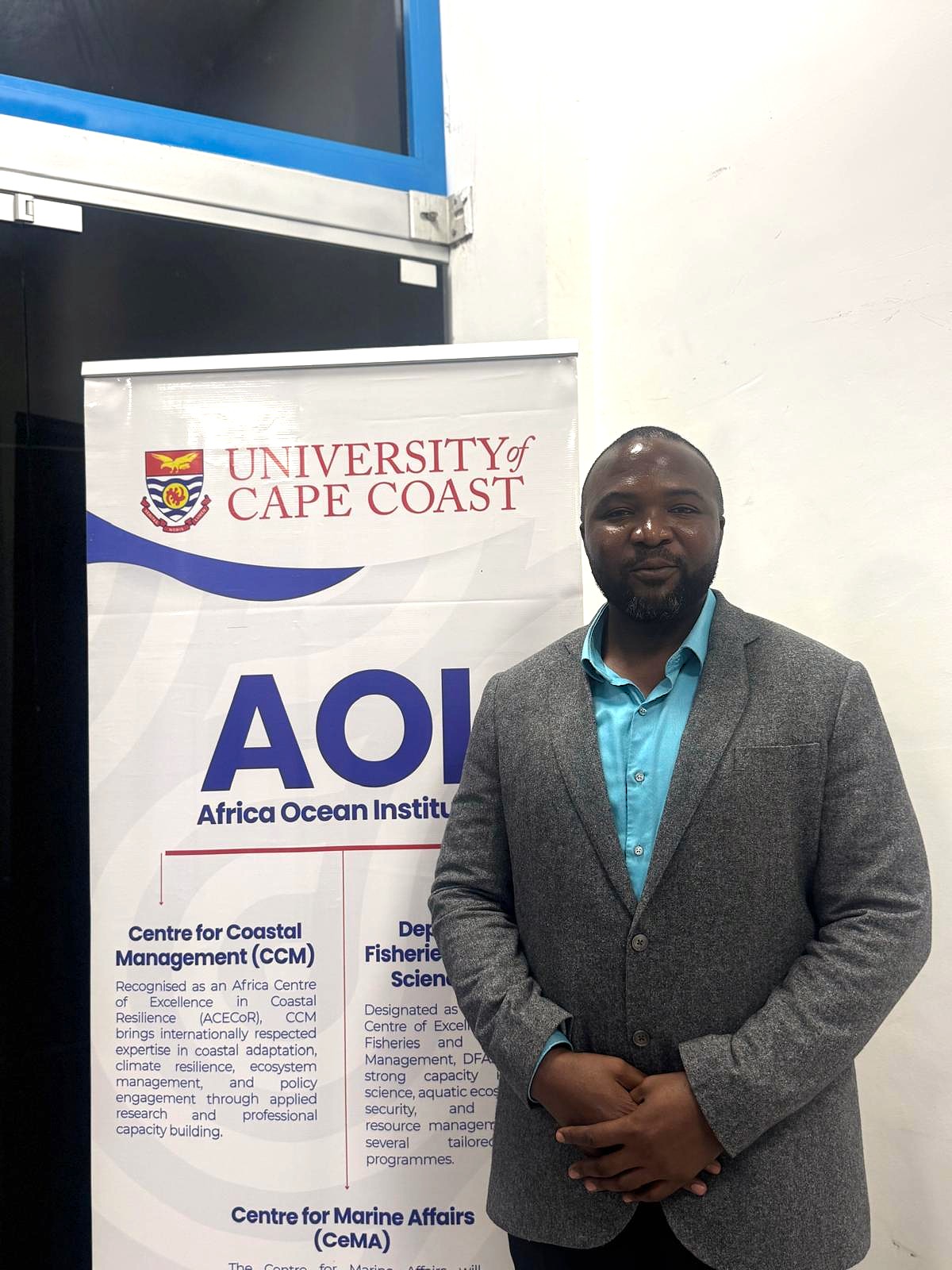
The Centre for Coastal Management, Africa Centre of Excellence in Coastal Resilience (CCM-ACECoR) at the University of Cape Coast (UCC) has hosted a PhD candidate under the Erasmus+ Mobility Programme, in July, 2026. The student, Commander Ayo Olusola Pacheco, is a Nigerian Navy officer and second-year PhD candidate in Maritime Affairs at the World Maritime University (WMU) in Malmö, Sweden.
Commander Pacheco’s visit formed part of the Erasmus+ Mobility Programme, an initiative strengthening the growing collaboration between the World Maritime University and CCM-ACECoR. This follows a successful student exchange earlier this year, during which seven Master’s and three PhD students from UCC, completed a month-long Erasmus+ mobility programme at WMU from April 11 to May 9, 2026.
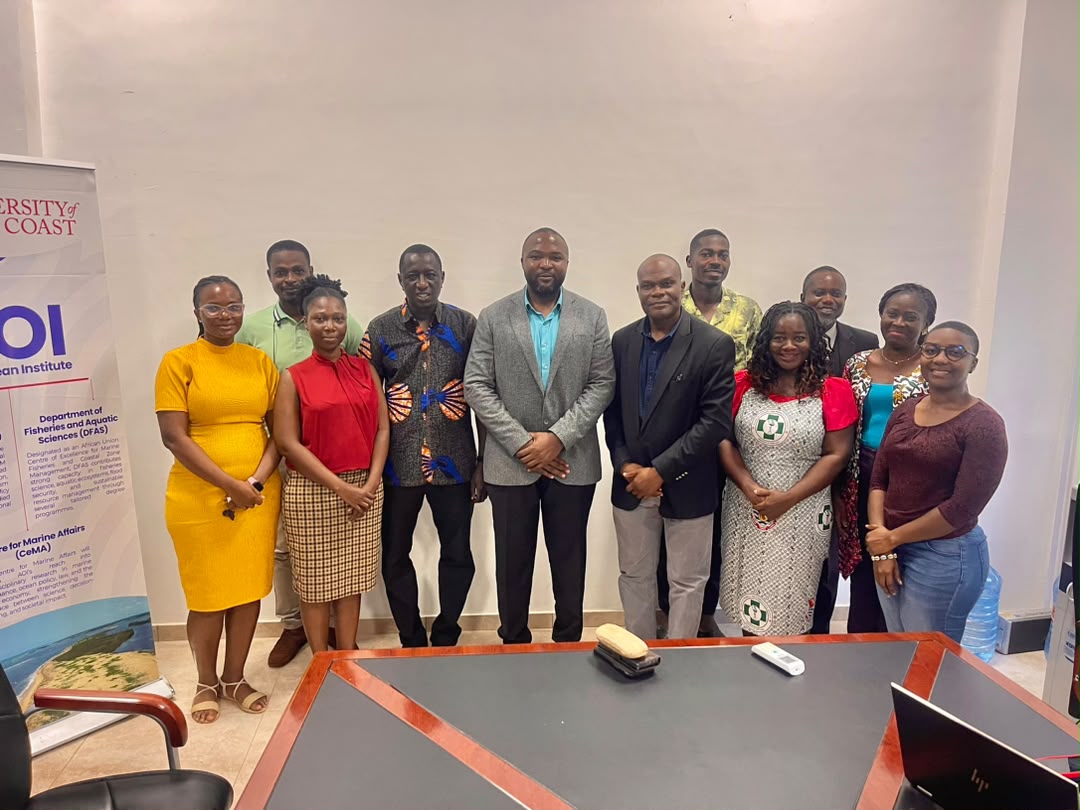
In an introductory meeting at CCM-ACECoR, he delivered a presentation on his PhD research, titled "Developing an Equitable Data Governance Framework for BBNJ Clearing-House Mechanism Implementation at the EEZ-ABNJ Interface". His work, focuses on identifying the institutional, infrastructural, and stakeholder conditions necessary to establish an effective and equitable data governance framework for implementing the Biodiversity Beyond National Jurisdiction (BBNJ) Agreement within the Benguela Current Large Marine Ecosystem. During a presentation to the CCM-ACECoR team, he explained how marine biodiversity data should be governed across Exclusive Economic Zones (EEZs) and Areas Beyond National Jurisdiction (ABNJ), stressing the importance of ensuring that biodiversity information moves seamlessly across these interconnected marine spaces to support effective conservation, scientific collaboration, and sustainable ocean governance.
The Acting Director of the Centre for Coastal Management, Professor Precious Mattah, speaking on behalf of the staff present, commended Commander Pacheco for tackling such a timely and globally significant issue. He stated that while the BBNJ Agreement presents new opportunities for sustainable ocean governance, its implementation raises critical questions about equity, particularly for developing countries like Ghana, which often lack the financial, technological, and institutional capacity to effectively monitor and manage marine resources beyond their national jurisdictions.
Dernière modification